Reduce maintenance costs with on-site belt fabrication. Avoid time-consuming machine teardowns by splicing and installing belts directly on your equipment. We specialize in Thermofix, Quickmelt, and Flexproof joining technologies to ensure your conveyor belting offers maximum flexibility and strength. Explore our high-performance flat and round belting options below to find the perfect match for your industrial application.
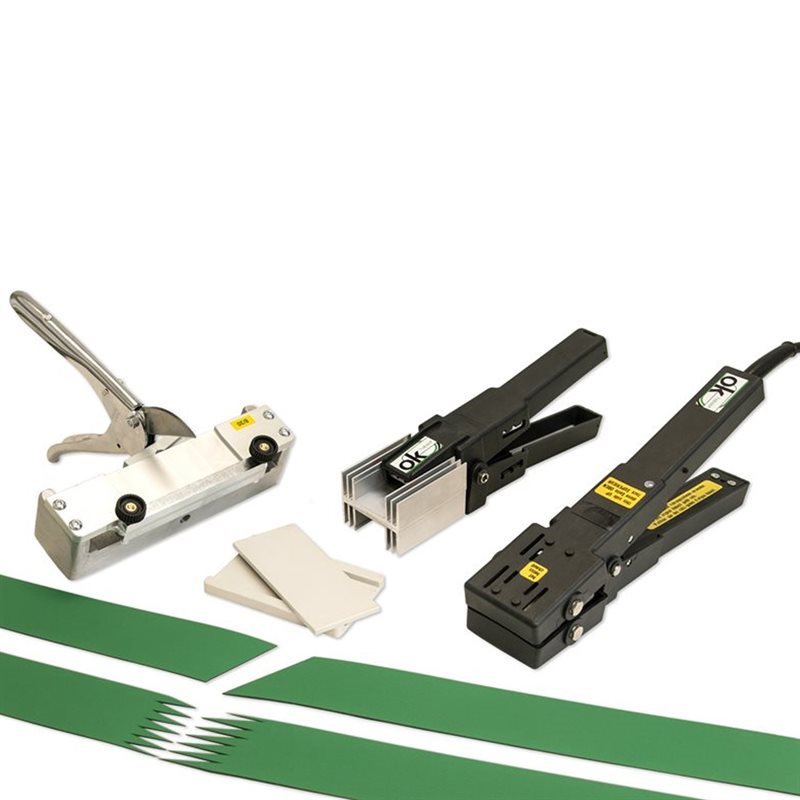
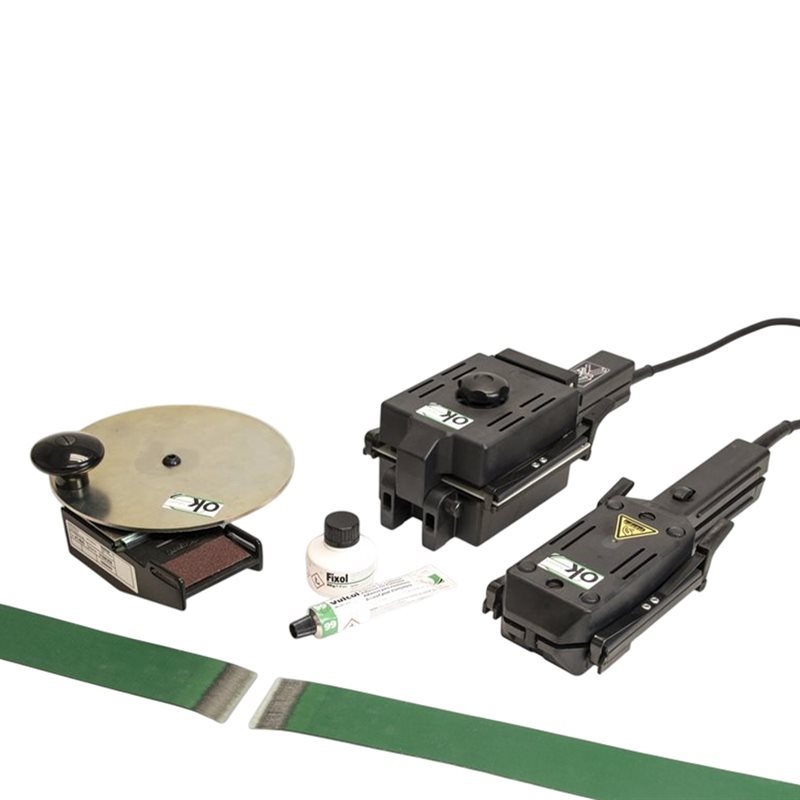
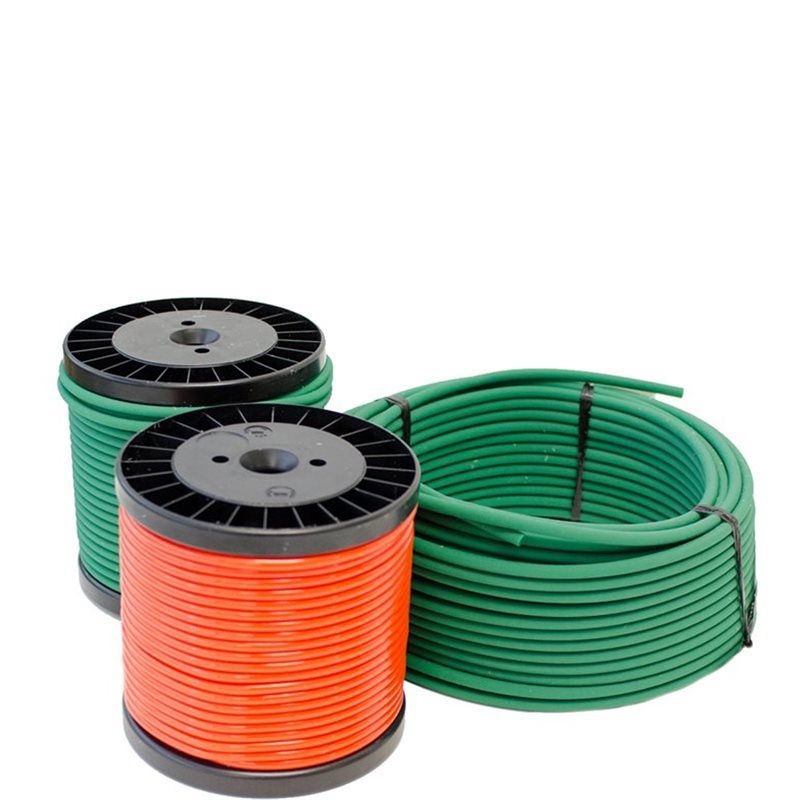
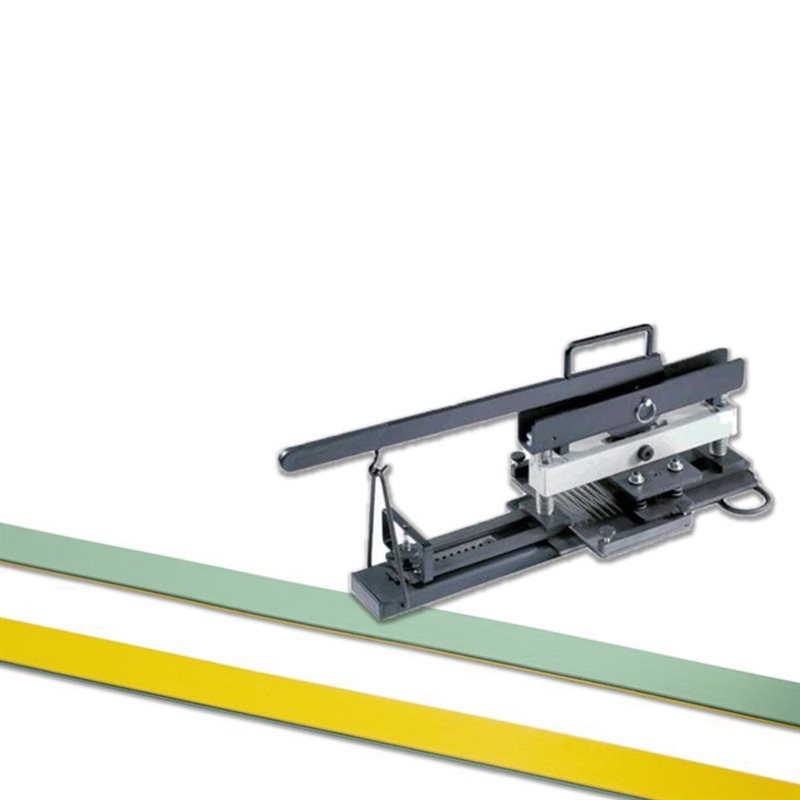
Update Ltd offers flat belt fabrication solutions for printing, bindery, packaging, conveying, and other industrial applications. Depending on the belt material, machine setup, and performance requirements, belts can be joined using Flexproof, Quickmelt, Thermofix, or other splicing methods.
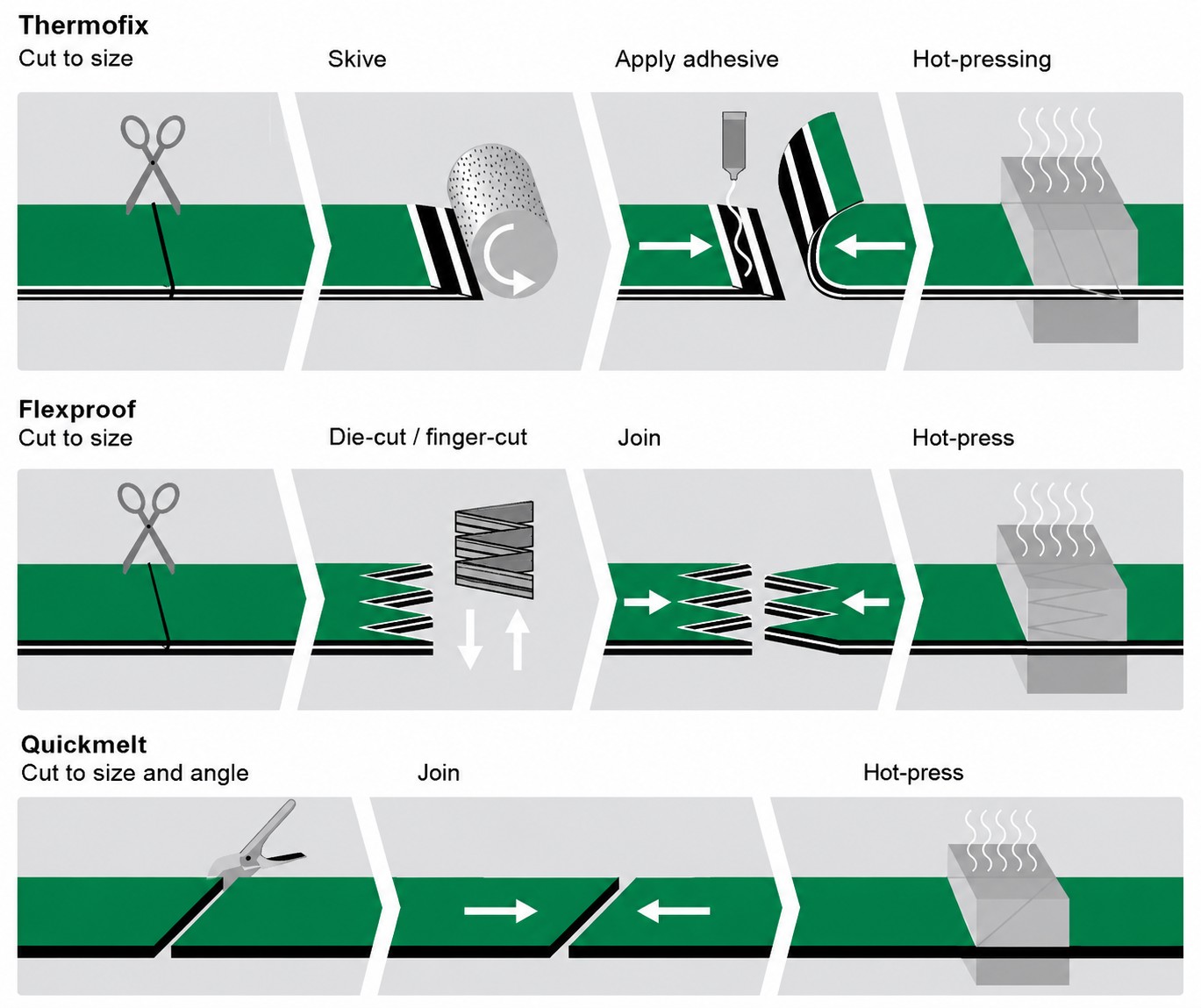
A finger-style splice that creates a flexible, adhesive-free joint. Often used where belts need to run around smaller pulleys.
A fast, adhesive-free joining option commonly used for quick repairs and smaller flat belt applications.
A skived lap splice that provides a strong, smooth joint for many multi-ply and higher-load belt applications.
What is the difference between Flexproof and Thermofix joining?
Flexproof creates a finger-style, adhesive-free splice that flexes easily around small pulleys, making it ideal for conveyor and packaging lines with tight radii. Thermofix uses a skived lap splice bonded under heat and pressure, producing a smooth, low-profile joint with high shear strength for multi-ply and heavy-load belts. In short: choose Flexproof for flexibility around small pulleys, and Thermofix for maximum joint strength on higher-load applications.
Can conveyor belts be joined or spliced directly on the machine?
Yes, in most cases. Portable belt joining tools — including hot presses, skivers, and finger cutters — let you splice or repair Quickmelt, Flexproof, and Thermofix belting without a full teardown. This on-site fabrication approach cuts machine downtime significantly compared to removing the belt for off-site repair or replacement.
Which belt joining method is best for my application?
The right joining method depends on several factors: belt material and ply construction, pulley diameter, running tension, machine layout, and load requirements. As a general guide, Quickmelt suits fast, small-scale repairs; Flexproof works best where belts wrap tight pulleys; and Thermofix is preferred for high-load, multi-ply belts needing a flat, seamless profile. If you're not sure which applies to your setup, contact our team and we'll help match the right method to your equipment.
How long does an on-site belt splice take?
Most Quickmelt and Flexproof joints can be completed in minutes once the belt ends are prepped, since both methods are adhesive-free and don't require extended cure time. Thermofix splices typically take longer due to the heat-press bonding cycle, but still avoid the downtime of a full belt replacement.
Do I need special tools to join belting on-site?
Yes — each joining method uses purpose-built tools: finger cutters and hot presses for Flexproof, a quickmelt cutter and press for Quickmelt, and a skiver plus heated press for Thermofix. Update Ltd stocks the full tool lineup for all three methods, along with replacement blades, heating elements, and guide rails to keep your joining equipment running.
